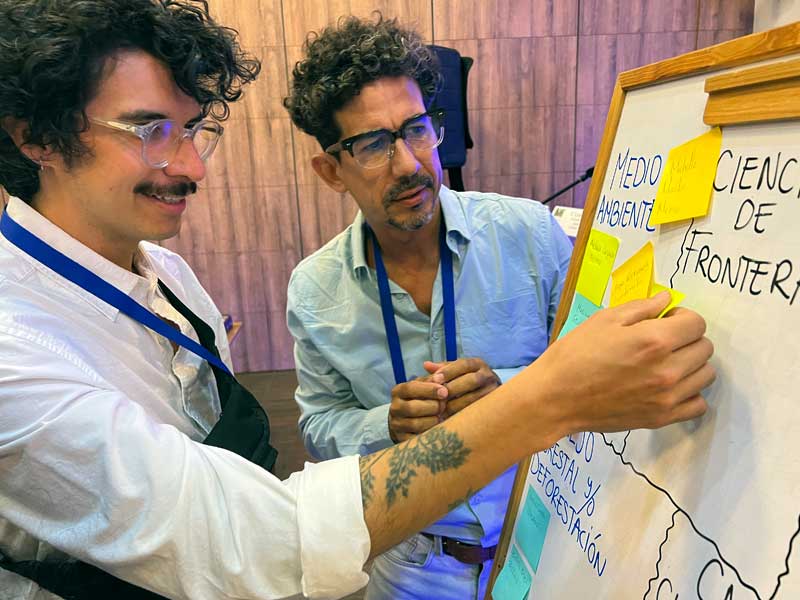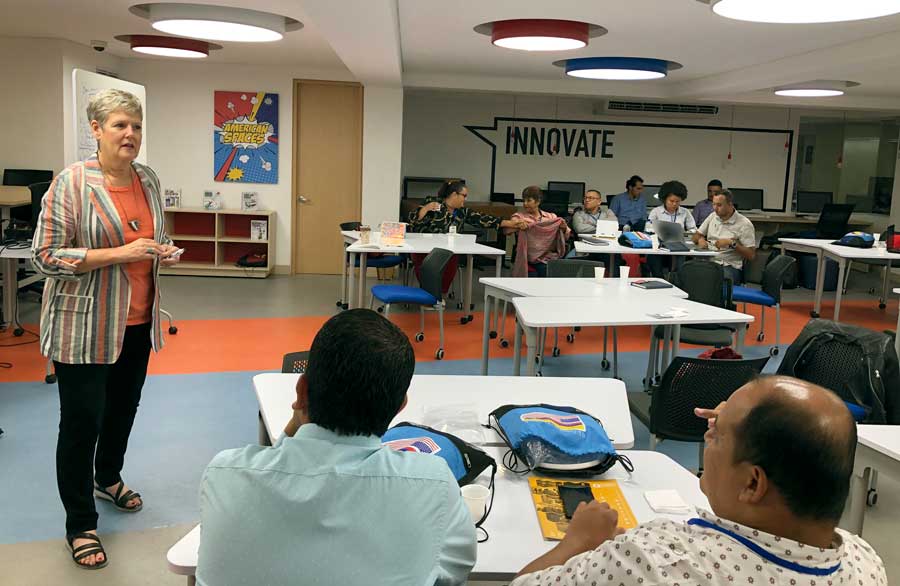
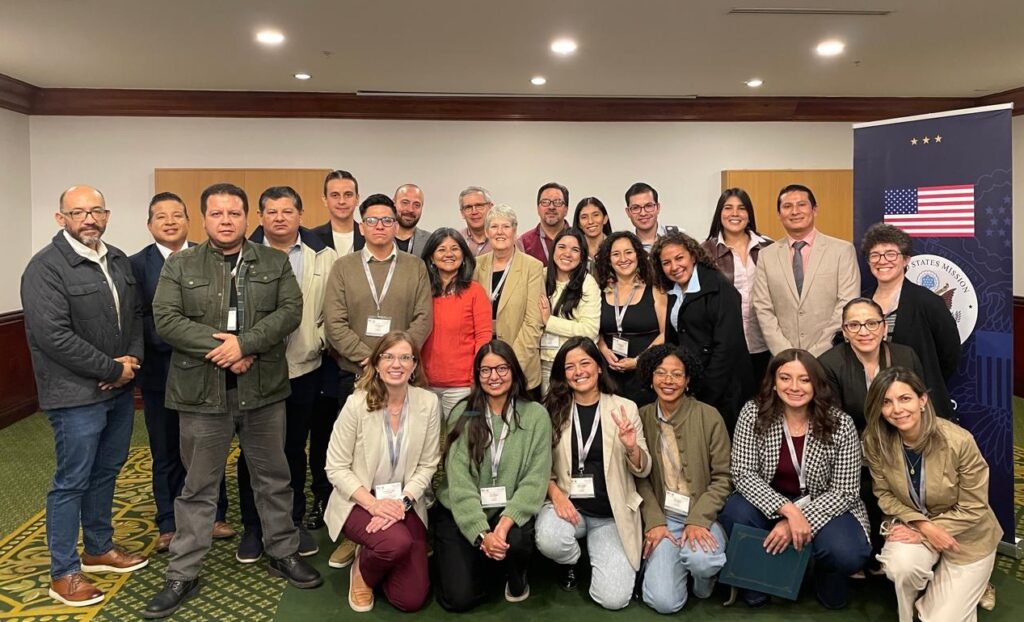
QUITO, Ecuador – Our InquireFirst team traveled to Quito, Ecuador, in May 2026 to conduct a day-long workshop on security protocols for Ecuadorian journalists who are conducting investigations on organized crime, corruption and environmental violations in increasingly dangerous conditions.
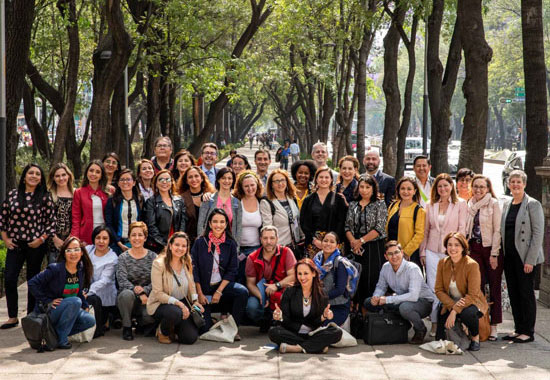
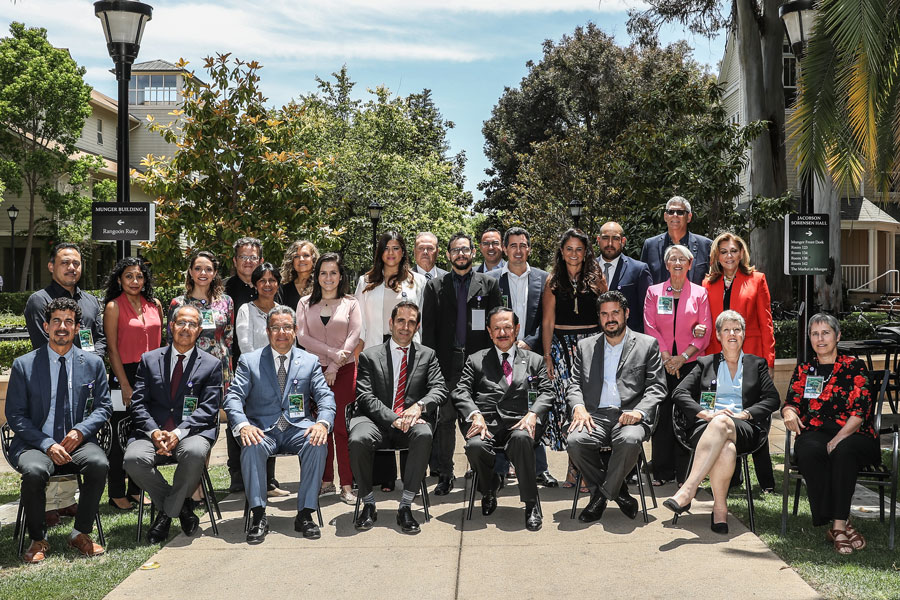
InquireFirst brought 24 journalists from across the country to attend our May 12 workshop. The journalists, who work in print, radio, television and online newsrooms, traveled from Guayaquil, Manta, Portoviejo, Duran, Tulcan and Lago Agrio to Ecuador’s capital for the workshop. Many said they had been threatened because of the investigations they have conducted. Some said their families are also at risk.
“We are journalists and we are also victims,” one journalist said.
The Ecuadorian government’s war on drug trafficking has turned the country into one of the most violent in Latin America, setting a record of 54 murders per 100,000 inhabitants in 2025, according to official data.
Six Ecuadorian journalists were murdered in the past year, said Artur Romeu, Latin America Director for Reporters Without Borders (RSF). “This is extremely serious ,” he said, confronting “Ecuador with one of the most dire situations on the continent.” The conditions in Ecuador now rival Mexico, where “historically, more journalists are murdered and the violence is more severe.”
The Inter American Press Association (IAPA) has warned that Ecuador is among eight countries in Latin America facing the most severe restrictions on freedom of expression and the press. In 2026, Ecuador dropped 31 places in the World Press Freedom Index, falling from 94th to 125th out of 180 countries evaluated by RSF.
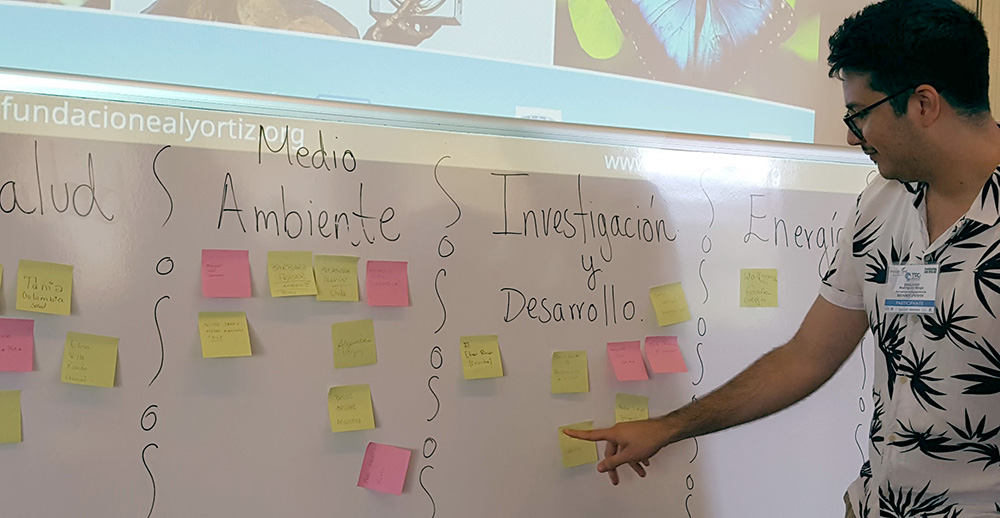
During the InquireFirst workshop led by Mexican safety expert Javier Garza, journalists outlined their concerns about the dangers they face. The forces working against independent journalism in Ecuador “are much more organized that we are,” said one journalist.
The journalists said they need effective tools to safeguard communications with sensitive sources. They also need protocols for protecting themselves while covering stories where organized crime figures are present, such as law enforcement operations, court hearings, and areas of the country where there is a history of violent crime.
Journalists said that they have been advised by their sources to avoid contacting law enforcement if they face a safety issue.
“In the event of an emergency, who should we turn to?” one journalist asked. “There is an ongoing campaign to delegitimize journalists. As a result, during high-risk assignments, we are often followed, photographed by the very officials we seek to interview, or met with hostility in remote areas far from major cities.”
As a last resort, the journalists sought protocols in case they have to flee the country. “I find it extremely valuable to address the question of who to turn to when exposed to threats from organized crime,” a journalist said.