
Sandra Young

Twenty years as the administrative coordinator for The San Diego Union-Tribune business department trained Sandra Young to follow the money, question authority and keep a watchful eye on motive.

She provided a layer of filters and structure that was dependable and forward thinking—in the end, helping to create a highly functioning team.

Five years in the bankruptcy legal community have verified everything she learned in the newsroom.

Eileen Truax

Eileen Truax is a journalist and writer. She was born in Mexico City, where she was a political reporter and a Congress correspondent for five years. In 2004 she moved to Los Angeles and for seven years worked for La Opinión, the largest Spanish-Language newspaper in the United States, covering immigration, politics and Mexico-U.S. relationships. She contributes to several Spanish-language publications in Mexico and the U.S., including Hoy Los Angeles and El Universal newspapers, and Proceso, Gatopardo and Newsweek en Español magazines. She also co-founded Malaespina Producciones, a documentary and short films video production company based in Los Angeles.
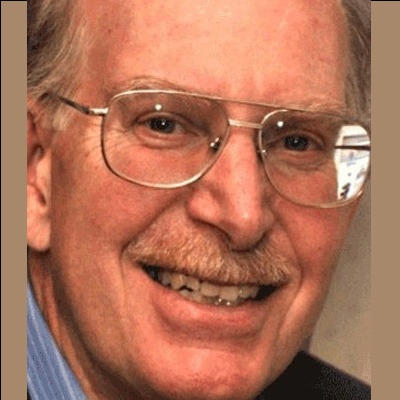
Eileen holds degrees in Social Communication and Communication and Politics and has been a fellow with the Scripps Howard Immigration Program (ICFJ), the Immigration in the Heartland program (Institute for Justice and Journalism), and the Inter-American Development Bank training program for Latin-American journalists (FNPI). She was an English-Spanish translator of the Latino Immigrant Civic Engagement report series for the Woodrow Wilson International Center for Scholars in Washington, D.C. She has twice received the José Martí Publishing Award from the National Association of Hispanic Publications (NAHP), and in 2010 she received the Media Woman of the Year Award from the California State Legislature. Currently, she is a member of the board of directors of the National Association of Hispanic Journalists (NAHJ). She is also the founder of Cuadernos Colectivo de Cronistas Latinoamericanos, a journalist network with members in eight countries.

Eileen is the author of “Dreamers, an Immigrant Generation’s fight for their American Dream” (Océano, 2013; Beacon Press, 2015), which sheds light on the complex situation of undocumented students in the U.S. She is co-author of “72 Migrantes,” a book with stories about Central American immigrants murdered in northern Mexico, and “Tú y yo coincidimos en la noche terrible,” a memoir on murdered Mexican journalists. Her first novel, “Fecha de Caducidad,” co-authored with Beatriz Rivas and Armando Vega-Gil (Alfaguara, 2015) is a love story marked by the disappearance of the 43 missing students of Ayotzinapa, Mexico. Eileen is now working on her second non-fiction book on the exile and asylum process from Mexico to the U.S.

Published Work

“Dreamers, an Immigrant Generation’s fight for their American Dream”
“To let the Dreamers speak for themselves” is the goal veteran journalist Truax sets for herself in this account of 10 undocumented young immigrants brought to the U.S. as children. She puts a human face on the debate around the proposed DREAM (Development, Relief, and Education for Alien Minors) Act. Publishers Weekly

“Fecha de Caducidad”
By Eileen Truax, Beatriz Rivas and Armando Vega-Gil
A love story marked by the disappearance of the 43 missing students of Ayotzinapa, Mexico.

“De aquí y de allá”: The other Dreamers
Close to 500,000 young people from Mexican families have been deported from the United States during the last 10 years. Whether their deportation was forceful or voluntary, they return to Mexico to find that in their native country they are also, in more than one sense, foreigners. They do not speak the language, they do not know anyone, and they receive neither guidance nor assistance from the authorities. What is the history of these “Other Dreamers” who are trying to remake their lives in a land that is theirs in name only? What challenges do they face? How do they reconcile their binational status? The Trans-Border Institute’s Freedom of Expression Project and the Division of International Studies and the Masters Program in Journalism and Public Affairs at Mexico’s Center for Investigation and Economic Education (CIDE) present, with support from the Ford Foundation, this investigation of a problem that demands the attention of both the Mexican and U.S. governments.

“Forced Labor” in “Jails” for Migrants Denounced
Detention centers oblige inmates to labor as cleaners for one dollar a day; former prisoners complain about “illicit enrichment” by U.S. companies that earn 3 billion.

Families: The Migra’s Latest Target
Arguing that they don’t want to split up families, migrant parents and children are held in US detention centers awaiting word on their fate.

Migrant children denounce torture
Complaints of abuse and torture by agents of the U.S. Border Patrol and other law enforcement agencies have increased in recent months. In Spanish.

One family, two worlds (Presentation in English, piece in Spanish).
In the Romero family, children learned that all siblings are equal. They all practice respect for their elders, they’re proud of being Mexican, and they love the United States, the country that has been their home for the last 18 years. But deep down, everyone knows that there is a difference between them. In households where some children are undocumented and other are citizens, tension can grow but ties can also become stronger. Presented with support from the Institute of Justice and Journalism.

“La frontera entre la vida y la muerte” (Spanish)
Desde 2008, cerca de cien mil mexicanos se han visto obligados a dejar su residencia en Juárez y se han mudado al área de El Paso, en Estados Unidos. Allí se encuentran con una realidad inhóspita. En medio de este exilio involuntario, un hombre, Carlos Spector, se ha dedicado a guiarlos y protegerlos. Ésta es la historia del abogado que lleva sobre sus hombros el peso de la tragedia de familias enteras y para quien cada día es una lucha contra el drama de la migración. Pero también es la historia de miles de víctimas que han encontrado una esperanza en el asilo político.

En México no podíamos vivir (Spanish)
En algún punto del desierto entre las ciudades de Phoenix y Tucson, en el estado de Arizona, se localiza el Centro de Detención de Eloy, una prisión que no es prisión y que alberga a personas que no cuentan con papeles de estadía en Estados Unidos. Ahí, un hombre llamado Yamil, oriundo del estado mexicano de Durango, se entregó voluntariamente a la espera de recibir asilo político y poder así reunirse con su esposa e hijo. Han transcurrido dieciséis meses y Yamil sigue esperando.

Ken Stone

Ken Stone

Journalist

In his 40-year journalism career, Ken Stone excelled at fact checking and copy editing at 10 newspapers (ending with The San Diego Union-Tribune for 24 years) and several websites (including three years with the Patch hyperlocal network).

His 20-year-old hobby site, masterstrack.com, won the Track and Field Writers of America’s inaugural prize for online excellence in 2009.

Published Work

Kersey faces carpetbagger claim in District 5: Incumbent city councilmember now has two Democratic opponents
Published February 10, 2016 San Diego City Beat
Mark Kersey attended Northwestern University in the 1990s along with future Late Night host Seth Meyers. Kersey is no TV funnyman but did win his seat on the San Diego City Council in a laugher. The video-tech researcher ran unopposed in 2012—the first time a non-incumbent did that since World War II, he’ll tell you.

The Case of the Missing Alpine High School
Published May 12, 2015 Voice of San Diego.org
Tiny Alpine has begged for its own high school since the late 1990s. It thought it would finally get one when a campus was mentioned in two winning school bond measures. It still hasn’t, and the culprits blocking the school range from various district officials to President Ronald Reagan.

What I Learned Covering San Diego at the Hyperlocal Level
Published August 27, 2013 Voice of San Diego
Was I invading privacy? Or was I exposing a legitimate news story? By revealing in July 2011 that “a member of a longtime La Mesa pizza family” faced charges of assault with a deadly weapon on a peace officer, I revived the age-old debate: What should media report?

Robert P. Laurence

Robert P. Laurence covered city hall, politics and rock ‘n’ roll music for The San Diego Union (later the Union-Tribune) for 35 years. He found his nirvana as the paper’s TV critic, a job he approached in the spirit of the rude kid sitting in the back of the class.

It was sometime in high school that Bob discovered he had a knack for writing.  He soon decided this was a skill that could be used for earning a living as a newspaper reporter. It was certainly more enjoyable than most other forms of work.

Bob has a B.A. degree in journalism from San Francisco State University and an M.A. in political science from San Jose State. His first reporting job was at the weekly Milpitas Post in what is now known as Silicon Valley; he later covered California’s nascent environmental movement for United Press International. When his wife, Susan White, was hired as an editor for ProPublica in New York City, the couple moved to Brooklyn for a three-year stay.

While Susan worked in Manhattan, Bob spent his days exploring the city and reporting what he found in 86 lengthy emails to friends that he later collected in an ebook, “Letters From Brooklyn: A Slightly Irregular Memoir of Everyday Life in New York City with a Tour Guide Thrown in.”

Elizabeth Douglass

Elizabeth Douglass is a veteran journalist whose work in print and online has received national recognition. She was a finalist for the Gerald Loeb Award, and her stories have led to appearances on The Rachel Maddow Show, Public Radio International, Chicago public radio, and local radio and television stations, as well as in a PBS documentary about turmoil in the defense industry.
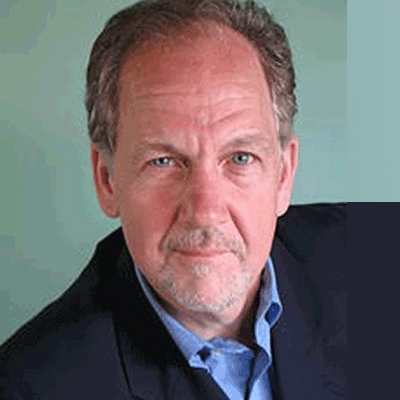
Most recently, she covered energy companies, pipelines and the nexus between energy and climate change for InsideClimate News. Her work there included widely-cited stories about vulnerable oil pipelines that cross through Yellowstone and other rivers; how energy projects across the country lock in decades of harmful carbon emissions; and how a culture of fear permeated a nuclear power plant.

Prior to InsideClimate News, she spent 10 years at the Los Angeles Times, where she covered energy, telecommunications and aerospace, and 10 years at the San Diego Union-Tribune.

Published Work

Exxon Knew Its Ruptured Pipeline Was Old, Defective and Brittle, and Still Added New Stresses
Published Aug 12, 2013 InsideClimate News
Industry experts say vulnerable pipelines like the one that failed in Arkansas can operate safely—but only if they’re carefully monitored and maintained. Read more…

Is the Oil Industry Off a Cliff or Just in a Down Cycle?
Published Aug 6, 2015 InsideClimate News
Low prices are forcing companies to curtail exploration and borrow to sustain dividends and stock value as the world looks to curtail emissions. Read more…

Ruptured Yellowstone Oil Pipeline Was Built With Faulty Welding in 1950s
Published Jan 22, 2015 InsideClimate News
Poor safety, defects may have added risks to pipeline that spilled up to 40,000 gallons of oil into the Yellowstone River. Read more…

In Keystone Fight and Beyond, Infrastructure Is Energy Policy
Published Jan 8, 2015 InsideClimate News
New pipelines, power plants and export facilities would lock in carbon emissions for another generation and continue the dominance of fossil fuels. Read more…

Workers at San Onofre Nuclear Plant Report Culture of Fear, Deep Mistrust
Published Oct 4, 2012 InsideClimate News
Edison, the utility that runs San Onofre, is in upheaval as it digests new evidence that many of its employees are working in an environment of fear. Read more…

The Oil Industry’s Fight to Kill Renewable Fuels—and Why It May Win
Published Feb 10, 2014 InsideClimate News
For all its faults, the Renewable Fuels Standard is the only federal policy that is steadily eroding the oil industry’s de facto monopoly on motor fuels. Read more…

Wall Street Demands Answers From Fossil Fuel Producers on ‘Unburnable’ Carbon
Published Oct 24, 2013 InsideClimate News
Groundbreaking initiative is forcing an investor rethink: What’s the value of fossil fuel stocks if companies must leave reserves in the ground? Read more…

San Onofre’s Problems Continue
Published February 26, 2009 Voice of San Diego
Mistakes and management problems continue to mount at the San Onofre nuclear plant, despite an unprecedented executive shake-up and a year-long effort to convince federal regulators and an industry ratings group that things are improving. Read more…

Anthony DePalma

Anthony DePalma spent 22 years as a reporter and foreign correspondent for The New York Timesserving as Bureau Chief in Mexico and Canada. In 2001 he published “Here: A Biography of the New American Continent,” which was re-released as an e-book in 2014. He has focused his journalism on Latin America, especially Mexico and Cuba, but he has also travelled widely and reported from places as diverse as Albania, Montenegro, Guyana and Suriname.
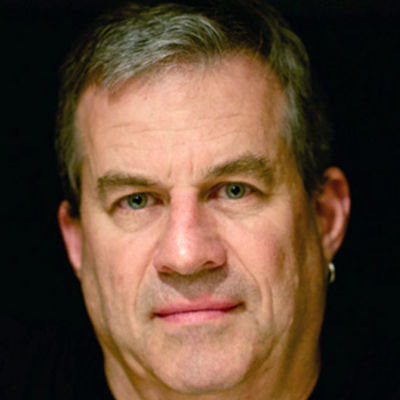
His second book, published in 2006, was “The Man Who Invented Fidel,” about the rise of Fidel Castro and the impact that journalism has had on U.S.-Cuba relations. The book has been translated into Spanish, Portuguese and Italian, and the film rights were purchased by Moxie Pictures. In the aftermath of the 9/11 attack, he wrote many of the Portraits of Grief articles that won a Pulitzer for The Times in 2001.

He left The Times in 2008 to become writer-in-residence at Seton Hall University, where he completed his latest book, “City of Dust,” about the environmental and health crises that followed 9/11. The book was the basis of a CNN documentary “Terror in the Dust,” which won the Society of Professional Journalists’ award for best documentary in 2011.

DePalma also is an adjunct professor at Columbia University’s Graduate School of Journalism.

Among his many professional recognitions are a 2007 Emmy finalist for “Toxic Legacy,” a documentary co-production of The New York Times and the Canadian Broadcasting Corp. In 2009, Columbia University awarded him the Maria Moors Cabot Award for distinguished international reporting. He has been named a media fellow at Stanford University’s Hoover Institution and a visiting scholar at the Kellogg Institute for International Studies at the University of Notre Dame.

He continues to write and lecture about Latin America and the environment, while also reporting on many other subjects.

Published Work

“City of Dust: Illness, Arrogance and 9/11”, FT/ Pearson, N.Y. 2010

“The Man Who Invented Fidel”, Public Affairs, N.Y. (Translations in Spanish, Italian and Portuguese) 2006

“Class Matters” Times Books, N.Y. (Chapter) 2005

“Here: A Biography of the New American Continent”, Public Affairs, N.Y. 2001, updated 2002

“Myths of the Enemy: Castro, Cuba and Herbert L. Matthews of The New York Times” Working Paper 313 Kellogg Institute for International Studies University of Notre Dame. 2004

“America Septentrional,” Foreign Policy Review Institute, Philadelphia, PA. 2003

“A Reluctant Trinity,” Woodrow Wilson Center for International Affairs, Washington, D.C. 2003

The North American Elections of 2000: An Analysis,” Orbis. 2003

Public Appearances

Anthony DePalma on the 9/11 settlement and his book “City of Dust: Illness, Arrogance and 9/11

Joanne Faryon

Joanne Faryon is a journalist and documentary producer specializing in long-form multimedia projects. Her work has been broadcast on the PBS NewsHour; NPR; The National, CBC’s flagship TV news program, and across multiple PBS affiliates in California.

In 2014, she was the first journalist to report on California’s “vent farms,” special nursing home units where thousands of people are kept alive artificially, lingering for years in various states of consciousness. The project, which she produced for inewsource, was awarded the Columbia School of Journalism Meyer “Mike” Berger Award for outstanding human interest reporting, a first place Investigative Reporters and Editors (IRE) award for investigative journalism, two National Edward R. Murrow awards, a National Association of Health Care Journalism Award, the 2015 SPJ Mark of Excellence Award (San Diego chapter) and was nominated for a national Emmy.

Faryon has gone inside three California prisons to document how sentencing laws contribute to an aging, sick, and expensive prison population. Her documentary, Life in Prison: The Cost of Punishment, has been viewed more than one million times on YouTube.

Faryon was also the first journalist in California to raise questions about the efficacy of the whooping cough vaccine in her 2010 documentary When Immunity Fails. Data showed most of the kids who got sick were up to date with their immunization.

Faryon traveled to the Netherlands where scientists had discovered a new mutant strain of the disease. Faryon has been a recipient of the USC Annenberg Walter Cronkite Award for Excellence in Television Political Journalism, two other National Edward R. Murrow awards, a Radio and Television News Association Golden Mike for investigative reporting, two regional Emmys and several San Diego SPJ awards.

Sam Quinones

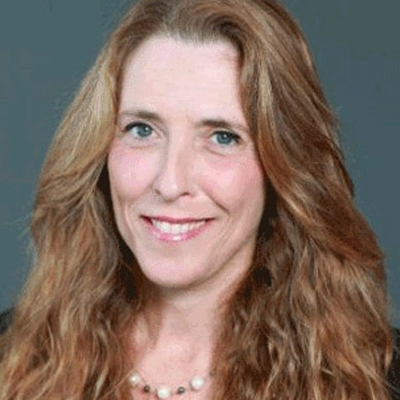
Sam Quinones is a Los Angeles-based freelance journalist and author of three books of narrative nonfiction.

His latest book is “Dreamland: The True Tale of America’s Opiate Epidemic” (Bloomsbury, 2015), for which he traveled across the United States. “Dreamland” was awarded National Book Critics Circle award in March 2016 and was named one of Amazon.com’s Best Books of the Year.”

Quinones worked for the Los Angeles Times for 10 years (2004-2014). He is a veteran reporter on immigration, gangs, drug trafficking and the border.
 

Published Work

The Virgin of the American Dream is a book of murals of the Virgin of Guadalupe which journalist Sam Quinones tells readers are used by Los Angeles business owners to dissuade taggers from marring their walls with graffiti. Quinones has been taking photos of the murals for more than a decade and combines his sharp eye and his gifted writing style to produce a powerful chronicle of life in the immigrant communities of Los Angeles.

Quinones, winner of the 2016 National Book Critics Circle Award for Nonfiction and InquireFirst journalist, talks about his new book with Gustavo Arellano and OCWeekly. Quinones, who first came to understand the significance of the Virgin while living and reporting in Mexico, told Arellano, “I began to see how the Virgin, translated to Los Angeles, was used for a similar reason by immigrants, helping them navigate a new world. I was struck too by how many folks used (the Virgin of Guadalupe) as protection, as a security guard for the modest investments they had in their mom-and-pop markets or flower shops or muffler shops. That was the spark for the project. I’ve lost count, but I’d bet I have more than a hundred murals shot – and many more to go.”

“Dreamland” recounts twin stories of drug marketing in the 21st Century. A pharmaceutical corporation promotes its legal new opiate prescription painkiller as non-addictive. Meanwhile, immigrants from a small town in Nayarit, Mexico, devise a method for retailing black-tar heroin like pizza in the United States, and take that system nationwide, riding a wave of addiction to prescription pills from coast to coast. The collision of those two forces has led to America’s deadliest drug epidemic in modern times.

“Dreamland” was selected as one of the best books of 2015 by Amazon.com, Slate.com, the Daily Beast, Buzzfeed, Seattle Times, Boston Globe, St. Louis Post-Dispatch, Entertainment Weekly, Audible, and in the Wall Street Journal and Bloomberg Business by Nobel economics laureate, Prof. Angus Deaton, of Princeton University.

Quinones’ previous two highly acclaimed books grew from his 10 years living and working as a freelance writer in Mexico (1994-2004).

“True Tales From Another Mexico: The Lynch Mob, the Popsicle Kings, Chalino and the Bronx” was released in 2001. It is a cult classic of a book from Mexico’s vital margins – stories of drag queens and Oaxacan Indian basketball players, popsicle makers and telenovela stars, migrants, farm workers, a narcosaint, a slain drug balladeer, a slum boss and a doomed tough guy.

In 2007, Quinones published Antonio’s Gun and Delfino’s Dream: True Tales of Mexican Migration”. In it, he narrates the saga of the Henry Ford of Velvet Painting, and of how an opera scene emerged in Tijuana, and how a Zacatecan taco empire formed in Chicago. Quinones tells the tale of the Tomato King, of a high-school soccer season in Kansas, and of Mexican corruption in a small LA County town. Threading through the book are three tales of a modern Mexican Huck Finn. Quinones ends the collection with a chapter called “Leaving Mexico,” which recounts his harrowing encounter with narco-Mennonites in Chihuahua.

Donald Trump is the opportunity Mexico has been waiting for
Published March 8, 2017 in Foreign Policy
The American president’s brash style conjures up the worst Yankee stereotypes that have lived in the Mexican mind since the beginning of the country.  Within Mexico, Trump’s acidic approach has burned away the gunk of domestic politics and formed alliances, at least for the moment, that seemed unthinkable a few weeks before.  His threatening presidency thus offers a chance for Mexico to put behind it battles over minutiae, see beyond parochial interests, unify in the face of a common enemy, and, maybe find the will to attack what has made it a country that people have risked death to leave.

Why Trump’s Wall Won’t Keep Out Heroin

Published February 16, 2017 in The New York Times
Walls have been shown to stop people. Illegal crossing has all but ceased in Tijuana because of two walls, including one that starts in the Pacific Ocean and runs for more than 14 miles before hitting a mountain.  But walls have not stopped drugs, especially heroin.

Once the World’s Most Dangerous City, Juárez Returns to Life
Published June 2016 in National Geographic
Amid drug wars, Ciudad Juárez began fixing the local justice system. Now crime is down and residents ‘are losing their fear.’ What happened in Juárez to allow people to stop cowering and resume living? México found the political will, in Juárez at least, to strengthen the criminal justice system and invest in local government. Doing so encouraged some unexpected protagonists: law enforcement officials who forged a more professional police force in a country where cops are often corrupt, business people who stayed to fight rather than flee, and government officials who spearheaded dramatic reforms.

Serving All Your Heroin Needs
Published April 17, 2015 in The New York Times
Fatal heroin overdoses in America have almost tripled in three years. More than 8,250 people a year now die from heroin. At the same time, roughly double that number are dying from prescription opioid painkillers, which are molecularly similar. Heroin has become the fallback dope when an addict can’t afford, or find, pills. Total overdose deaths, most often from pills and heroin, now surpass traffic fatalities. If these deaths are the measure, we are arguably in the middle of our worst drug plague ever, apart from cigarettes and alcohol.

A New Art Scene Flourishes in Old Tijuana
Published April 14, 2015 in KCRW’s Which Way, LA?
Tijuana is in the midst of a burst of artistic and entrepreneurial creativity as new surprising riffs are rising out of the Tijuana of old. Velvet painting was once Tijuana’s only connection to art; the work of velvet painters planted the seeds for what is now a large and experimental modern-art scene. A town once known for cantinas and strip clubs is home to microbreweries and restaurants serving creative “Baja-Med” cuisine.

How Mexicans Became Americans
Published January 17, 2015 in The New York Times
SOUTH GATE, Calif. — A few weeks ago, the City Council in this suburb southeast of Los Angeles appointed a Mexican immigrant to its advisory council. Jesus Miranda is from Michoacán and owns a taco restaurant here. He’ll advise the council on housing development and other issues.Mr. Miranda’s appointment is hardly national news. But small moments like these are signs of a historic change of heart toward America and civic engagement among Mexican immigrants, many of whom, like Mr. Miranda, have been here for decades.

The End of Gangs
Published December 29, 2014 in Pacific Standard magazine
In 2007, when housing prices were still heated, factory worker Simon Tejada put his home on the market. It was a well maintained three-bedroom in the Glassell Park district of Northeast Los Angeles, and the structure was appraised at $350,000. (Tejada had bought it for $85,000 in 1985.) But only one offer came in: $150,000. “Your house is fine,” the guy told Tejada. “The neighborhood’s awful.”

In Tijuana, Mexicans Deported by U.S. Struggle to Find ‘Home’
Published November 14, 2014 in National Geographic
TIJUANA, Mexico—On the U.S. side of the border, an immigration officer unlocked a padlock on a metal door. On the other side, a Mexican officer unlocked another padlock. With that bit of antiquated protocol, the metal door opened, and Antonio Gomez stepped back into the country he’d fled as a boy.

The Rebirth of Tijuana
Published October 17, 2014 in The New York Times
Tijuana, Mexico — In Tijuana the other day, I met a waitress named Mari. Mari had left her home in Acapulco to cross illegally into the United States in 1999, but was deported three years ago to Tijuana. It had been a long time since she had seen her mother, so she went home to visit.

Public Appearances

Another México: A conversation with Storyteller Sam Quinones

Colin Marshall talks with reporter Sam Quinones, who covered gangs, drugs, and immigration at the Los Angeles Times for a decade. He has written the books Antonio’s Gun and Delfino’s Dream, True Tales from Another Mexico, and the new Dreamland: The True Tale of America’s Opiate Epidemic.

Caitlin Rother

New York Times bestselling author and investigative journalist Caitlin Rother has written or co-authored 10 books, drawing from decades of newspaper experience covering topics ranging from criminal justice, suicide, addiction, mental illness and murder to corruption, incompetence, and waste at City Hall and in Congress. Rother has done more than 100 TV and radio appearances as a crime expert. Her latest book, “Then No One Can Have Her,” and her Kindle short, “A Complicated Woman,” were published in 2015. Her next book, “Love Gone Wrong,” a compilation of intriguing murder cases, will be released in 2016. She is currently working on a political crime book about San Diego’s historic Strippergate corruption case.

Published Work

La Jolla Cove is becoming a sea lion cesspool…and there’s not much to be done about it.
Published January 15, 2014 in the San Diego Reader.
A story about the sea lion population explosion, and related environmental issues, at the La Jolla Cove, won “Best of Show” for magazine stories at San Diego Press Club, January 2014.

Should California Taxpayers Pay for a Killer’s Sex Change?
Published August 27, 2015 in Orange Coast magazine.
A story about debate over transgender prisoners’ rights to sexual reassignment surgery at taxpayer expense, and specifically Skylar Deleon, who is on California’s death row for murdering three people.

Rother’s latest of 10 books, “Then No One Can Have Her.”
Released October 2015.
A narrative non-fiction tale about the story behind the Steve DeMocker murder case out of Prescott, Arizona,

Rother’s recent Kindle “short,” A Complicated Woman.”
Released December 2015.
A compilation of historic and compelling South Carolina murder cases.

Rother’s most controversial book, Lost Girls.”
Released July 2012.
The story behind the rape and murder of San Diego area teenagers Chelsea King (of California’s Chelsea’s Law) and Amber Dubois by sexual predator John Gardner.

Rother’s award-winning investigative profile of Carl DeMaio from 2005, which was widely quoted and considered the “Bible” on the highly controversial DeMaio when he ran for mayor of San Diego in 2012 and for Congress in 2014.

Public Appearances

TV clips of Rother discussing some of the subjects of her true crime thrillers.
Peggy Pico of KPBS interviews Rother about the controversy over her book, Lost Girls.